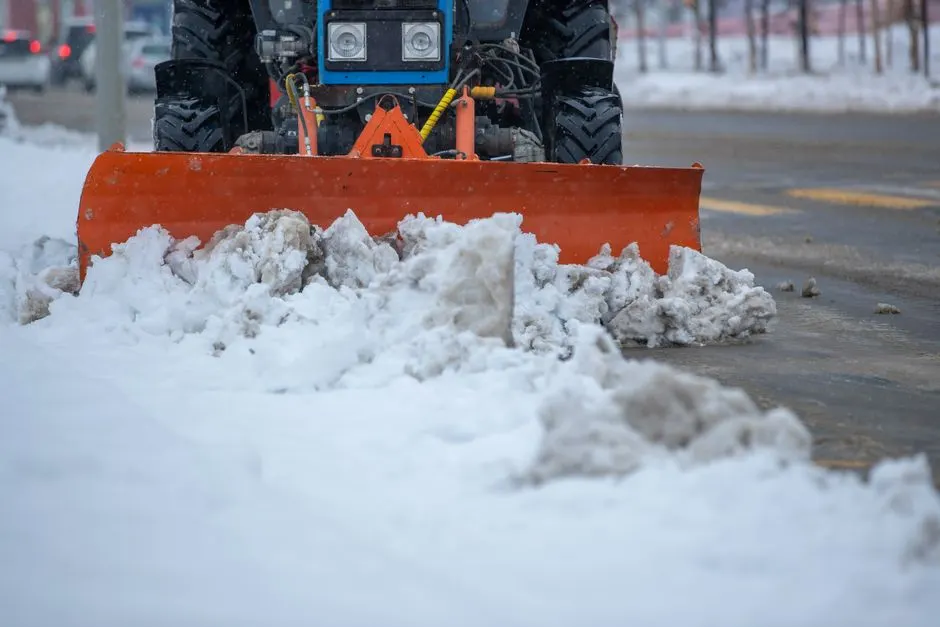
Spring snowmelt water removal for Grand Junction homeowners is the process of pumping, extracting, and drying out the water that arrives when the snowpack on the Grand Mesa and Bookcliffs melts faster than the ground can absorb it. It usually starts in late February and runs through May, and the water almost always shows up in the same places: basement floor drains, crawl space vapor barriers, window wells, and the low corner of a slab. This post covers where the water comes from, how to keep it out, what extraction and drying costs in 2026, and when it is time to stop mopping and call someone.
Why spring snowmelt floods Grand Junction homes
Grand Junction sits in a valley where the surrounding mesas hold snow well into April, and that snow does not melt gradually. A stretch of 60-degree afternoons in March can release two to three weeks of snowpack in four or five days. The ground underneath is still frozen a foot or two down, so the meltwater has nowhere to soak in. It runs downhill instead.
Add the spring rain that hits the valley in April and you get the pattern we see every year: a dry basement in February, two inches of water on the floor by the second week of March. The Colorado River and its tributaries - the Gunnison, the Colorado itself, and the irrigation laterals that cross the valley - all rise at the same time, which pushes the water table up under homes that have never flooded before.
Homes built before 1980 on the north side of town, especially the older blocks near downtown and along 12th Street, tend to have the worst of it. Those foundations were poured without modern drainage matting, and many still have clay tile footer drains that have collapsed or filled with roots. When the water table rises, it finds the path of least resistance - usually straight through the cove joint where the floor meets the wall.
How snowmelt water gets into your house
Snowmelt rarely enters through one dramatic hole. It seeps in through six or seven small ones, and by the time you notice the carpet is wet, the water has been moving for days.
- Hydrostatic pressure under the slab. When the water table rises, water pushes up through the cove joint and any hairline crack in the floor. This is the most common cause of spring basement flooding in Grand Junction.
- Window wells without covers. A well that fills with meltwater drains straight against the foundation wall. If the weep holes are clogged with leaves, the well becomes a bucket.
- Failed sump pumps. Pumps sit idle from October to February. The float sticks, the check valve fails, or the discharge line is still frozen when the first big melt hits.
- Grading that slopes toward the house. Settled backfill and years of mulch against the foundation push surface water inward instead of away.
- Crawl space vents. Open foundation vents let meltwater blow in during spring storms and trap humid air under the house.
- Roof and gutter overflow. Ice dams release all at once, and downspouts that dump within three feet of the foundation send that water straight to the footer drain.
If you are dealing with any of these, our team handles Basement Water Removal in Colorado and can usually tell you within the first walkthrough which one is the source.
How do I prevent snowmelt flooding in Grand Junction Colorado?
You prevent snowmelt flooding in Grand Junction by moving water away from the foundation before the melt starts, and by making sure the systems that handle it are working when you need them. The work happens in February, not in April.
- Clear the snow away from the foundation. Shovel the first three feet out from the walls and pile it downhill. That alone removes hundreds of gallons from the equation.
- Test the sump pump with a bucket of water. It should kick on within an inch of the float rising and shut off clean. If it hums and does not move water, the impeller is jammed.
- Check the discharge line. It needs to run at least 10 feet from the foundation and slope downhill. A frozen or buried line just cycles water back into the pit.
- Clean gutters and extend downspouts. Four to six feet of extension is the minimum. Ten is better on the north side of the house.
- Re-grade the soil. You want a six-inch drop over the first 10 feet away from the wall. Bagged topsoil and a rake will do it.
- Install window well covers. Clear polycarbonate covers cost $40 to $120 each and stop the most common point of entry on split-level homes.
- Keep the crawl space sealed. A 6-mil vapor barrier and closed vents keep spring humidity from condensing on the floor joists.
If your home has flooded in previous springs, the fix is usually drainage, not another pump. We see this constantly in the older neighborhoods, and it is why so many homeowners in Grand Junction Water Removal end up needing footer drain work alongside the cleanup.
What spring snowmelt water removal actually involves
Extraction is the fast part. Drying is the part that determines whether you end up with a mold problem in June.
On a typical Grand Junction snowmelt job, we start by finding the entry point and stopping the flow - shutting off the source, clearing the drain, or setting a temporary pump in the window well. Then we extract. Truck-mounted units pull water out of carpet and pad at roughly 12 to 15 gallons per minute, which is why a 500-square-foot finished basement that would take you two days with a shop vac takes us about 90 minutes.
After extraction comes the part most homeowners underestimate. We set commercial dehumidifiers and air movers, and we run them until the moisture content in the drywall, baseboards, and framing reads within 10 percent of a dry reference point. That is usually three to five days. We check with a pin meter and a thermal camera each day and log the readings.
If the water came through a sewer line or a floor drain backing up, the category changes. That is contaminated water, and it requires removal of affected drywall and insulation rather than drying in place. Our Sewage Water Removal in Colorado crews handle those calls with the right PPE and disposal.
Grand Junction snowmelt water extraction cost in 2026
Typical 2026 pricing in the Grand Valley runs $1,200 to $2,800 for a standard snowmelt extraction and dry-out on a 500- to 1,000-square-foot affected area. That covers the call-out, extraction, equipment placement, daily monitoring, and removal of the equipment when the readings are dry.
What moves the number:
- Square footage. Roughly $2.50 to $4.00 per square foot for extraction and drying.
- Water category. Clean meltwater is the cheapest. Sewage backup or river water adds 30 to 60 percent for disposal and antimicrobial treatment.
- Materials affected. Carpet and pad usually come out. Hardwood may be salvageable with mat drying, which adds a day and a few hundred dollars.
- After-hours calls. Emergency snowmelt water removal in Grand Junction at 2 a.m. carries a higher rate than a scheduled morning visit.
- Crawl space work. Tight access and vapor barrier replacement add $400 to $900 on top of the base job.
If the water has been sitting for more than 48 hours, add mold remediation to the budget. That starts around $1,500 for a small area and goes up from there. Getting us out on day one is almost always cheaper than waiting until day five.
Does insurance cover snowmelt water damage in Grand Junction?
Most standard Colorado homeowners policies cover sudden and accidental snowmelt damage - a failed sump pump, a burst pipe from a freeze-thaw cycle, or a window well that overflowed during a single event. They typically do not cover long-term seepage, repeated groundwater intrusion, or water that entered through an unsealed foundation over multiple seasons.
The distinction the adjuster looks for is whether the water arrived suddenly or gradually. A sump pump that died on a Tuesday and flooded the basement by Wednesday is usually covered. A slow seep that has been dampening the same corner for three springs is usually not.
Two things help your claim: call us before you move anything, and photograph the water line on the wall before it dries. We document moisture readings, affected materials, and the source, and we send that report to your adjuster. It is the same documentation our crews use on Sump Pump Failure Water Removal in Colorado jobs, and it is what turns a denied claim into a paid one.
Common mistakes we see every spring
The same five mistakes show up on Grand Junction snowmelt calls year after year, and each one adds cost.
- Waiting to see if it stops. Meltwater does not stop on its own. Every hour it sits, it wicks higher into drywall and further under baseboards.
- Running a shop vac and a box fan. A shop vac gets the visible water. It does nothing for the moisture inside the wall cavity, which is where mold starts.
- Turning up the furnace. Heat without airflow drives moisture into cooler surfaces. You end up with condensation on the joists instead of dry framing.
- Pulling up carpet and throwing it out immediately. Some carpet is salvageable if it is extracted and dried within 24 hours. Let us look before you haul it to the dump.
- Assuming the sump pump still works. Pumps that sat idle all winter fail on the first big melt more often than any other time of year.
One more: do not run a gas-powered pump or generator in a closed basement. Carbon monoxide kills people in flooded homes every spring in Colorado.
When to call a professional
Call us when the water is deeper than an inch, when it has been standing more than 12 hours, when it smells like sewage, or when it has reached drywall, insulation, or a finished floor. Those are the four conditions where DIY cleanup turns into a mold job.
CO Water Remover Pros handles snowmelt extraction, structural drying, and moisture verification across the Grand Valley and the Front Range. We give you a flat price before we start, we tell you what is salvageable and what is not, and we do not leave until the meters say the structure is dry. If you are not sure whether your situation is a phone call or a mop, call us anyway - we will tell you straight.
Frequently Asked Questions
How much does spring snowmelt water removal cost in Grand Junction?
Expect $1,200 to $2,800 in 2026 for a typical 500- to 1,000-square-foot basement or crawl space, including extraction, drying equipment, and monitoring. Sewage-contaminated water, hardwood salvage, or mold remediation push the total higher. We quote a flat price after a walkthrough.
How do I prevent snowmelt flooding in Grand Junction Colorado?
Shovel snow three feet back from the foundation, test your sump pump in February, extend downspouts at least six feet, and re-grade soil so it drops six inches over the first 10 feet. Clear window wells and cover them. Those five steps prevent most spring basement flooding we see.
Who do I call for snowmelt water extraction in Grand Junction?
Call a licensed water damage restoration company that does extraction and structural drying, not just pumping. CO Water Remover Pros handles emergency snowmelt calls across the Grand Valley, usually arriving within 60 to 90 minutes. We extract, dry, and verify with moisture meters before we leave.
Does insurance cover snowmelt water damage in Grand Junction?
Most policies cover sudden events like a failed sump pump or a burst pipe, but not gradual seepage over multiple seasons. Photograph the water line before it dries, do not move anything, and get a documented moisture report from your restoration company to support the claim.
How fast can you remove snowmelt water from my home in Grand Junction?
Extraction on a typical basement takes 90 minutes to three hours. Structural drying runs three to five days with equipment on site. We monitor daily and pull the gear once moisture readings are within 10 percent of a dry reference.
Get help with Water Removal in Grand Junction
If meltwater is already in your basement or crawl space, every hour counts. Call CO Water Remover Pros at (833) 640-1438 and we will get a crew to your door, extract the water, and dry the structure before it becomes a mold problem.